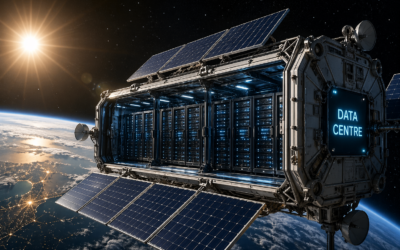
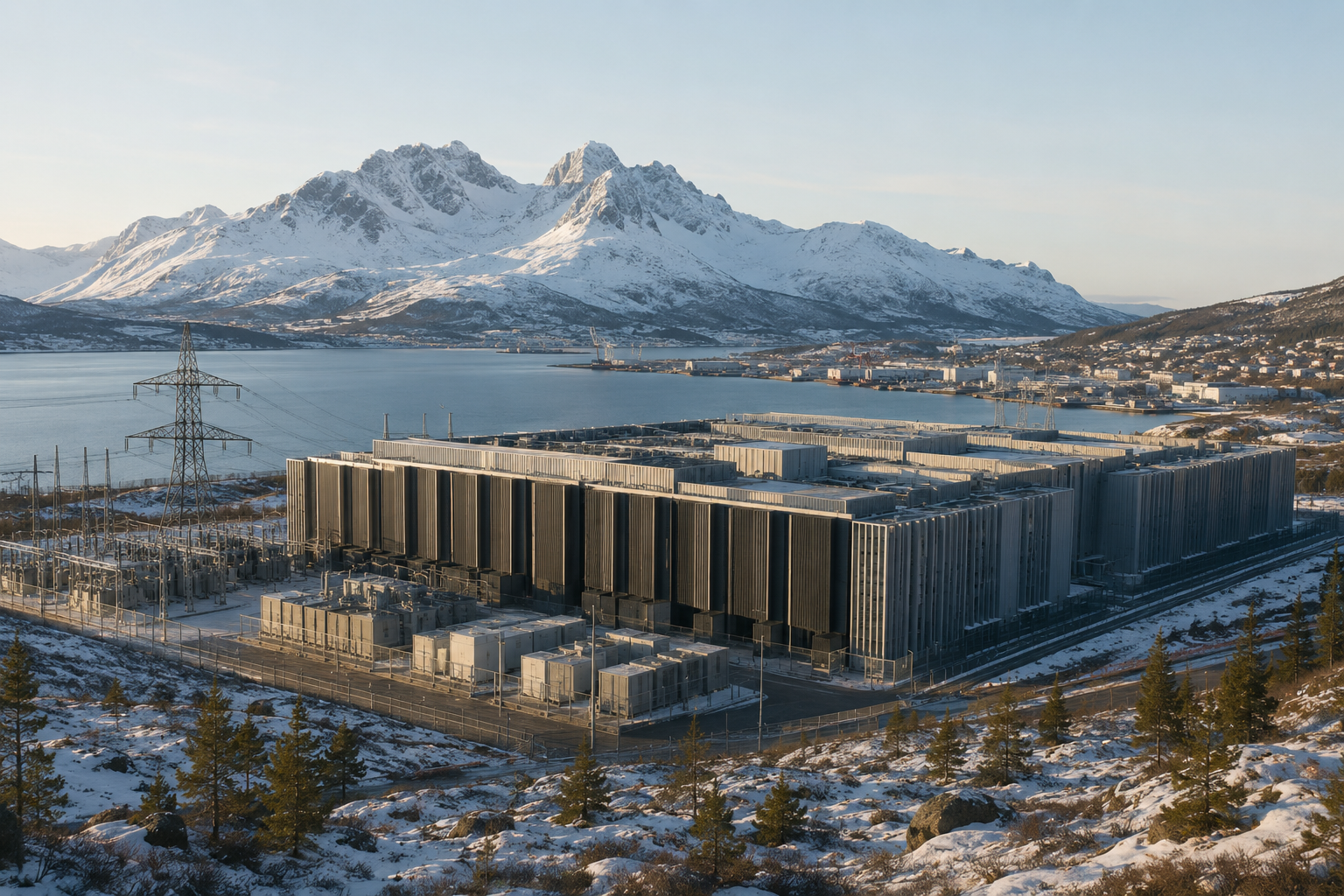
For a long time, Europe’s plan for digital infrastructure has been pretty straightforward: build where lots of people live, where businesses need it, and where fast connections are a must. This approach made cities like Frankfurt, London, Amsterdam, Paris, and Dublin really important. And they still are – they’re not going to lose their importance anytime soon. But now, with AI infrastructure coming into play, things are starting to look different. The way we think about building digital infrastructure is changing, and it’s going to affect the whole map.
The reason is straightforward, big AI training doesn’t work the same way as traditional cloud or enterprise workloads when it comes to location. Latency is still important for a lot of applications, but for high-density AI training, what really matters is power, and not just any power, but the scale of it, the cost, the reliability, and how quickly it can be secured. This is because large-scale AI training requires a huge amount of energy to run, and the availability and cost of that energy can make or break a project. As a result, the key factor in deciding where to locate AI training operations is no longer just about being close to users or having low latency, but about having access to cheap, reliable, and abundant power.
That is why the Nordics are becoming much more interesting. The region offers a combination of factors that are hard to ignore:
– large-scale power availability
– renewable-heavy generation
– relatively attractive energy pricing
– cooler operating conditions
– land for larger campus deployments
– it’s well-suited for handling high-density computing and artificial intelligence training workloads
In other words, AI infrastructure is beginning to follow energy geography, not only user geography.
This doesn’t mean that the traditional major markets in Europe, like Frankfurt, London, Amsterdam, and Paris, will become less important. Instead, it’s more likely that Europe will develop a more complementary digital infrastructure system. The main cities will still be crucial for applications that need very low latency, like financial transactions and cloud computing. They will also remain important to big companies and financial systems. On the other hand, the Nordic countries, such as Sweden, Norway, and Denmark, will become more important for certain types of computing, like artificial intelligence and high-density computing, and for large-scale data centres.
That distinction matters. The next phase of European data centre growth may be less about asking “where are the users?” and more about asking “where can the megawatts actually be delivered?”
There’s been a lot of talk about AI infrastructure in the Nordic region lately. For example, OpenAI’s new project in Norway, called Stargate, is a big deal. They’re working with Nscale and Aker to build something in Narvik that will have a lot of power – 230MW to start with – and use a huge number of NVIDIA GPUs, 100,000 to be exact. Meanwhile, in Finland, Nebius is planning to build an AI factory that will be even bigger, with 310MW of power. Nscale and Fortum are also teaming up to work on AI data centres in Finland. All these announcements show that the Nordic region is becoming a hub for AI infrastructure, and it’s exciting to think about what this might mean for the future.
When it comes to announcements, they’re not the same as actually having the power to deliver. There are a lot of other factors that come into play, like grid queues, getting the necessary permits, having the right transformers in place, dealing with local resistance, and the risk of something going wrong during execution, etc. In fact, sometimes these factors can be even more important than having the money to make it happen.
The thing is that’s exactly what matters. The people and places that already have a strong grip on energy will have the upper hand. You see, in a world where artificial intelligence is changing how we build and manage our infrastructure, access to energy is no longer just about saving money. It’s becoming a key factor in staying ahead of the competition.
Over the next 24 to 48 months, I suspect this will become one of the defining questions in European digital infrastructure. Can AI reshape the geography of European data centres? My view is that it already is. Not by replacing the established hubs, but by adding a new Nordic corridor built around energy, cooling, scale and AI training demand.
For investors, operators and network planners, the secondary effects may be just as important as the facilities themselves: fibre routes, interconnection demand, energy strategy, heat reuse, regional permitting models and the emergence of new AI infrastructure clusters.
The physical geography of AI is still being written. Europe’s next major infrastructure advantage may not be where the users are most concentrated. It may be where power, land, climate and execution capability come together.
Sources:
[Stargate Norway] https://openai.com/index/introducing-stargate-norway/
[Nebius Finland announcement] https://nebius.com/newsroom/nebius-to-construct-310-mw-ai-factory-in-finland
[Nscale/Fortum Finland announcement] https://www.nscale.com/press-releases/nscale-data-center-finland